Fuels
When Old Wood-Burning Appliances Remain at the Heart of the Problems
Wood-Burning Warnings
By Alyssa Jerome
| January 27, 2025
Every winter, during periods of poor air quality, advisories often recommend reducing or banning wood heating. These alerts raise ongoing concerns about air quality and health. A recent study in Science Advances estimated that 8,600 premature deaths annually in North America are linked to residential wood heating, highlighting the significance of wood-burning issues.
All these warnings, however, stem from a poorly understood context. They mainly concern old wood stoves built to outdated standards, which haven’t been allowed for sale in Quebec for over 15 years. These devices are still in use because they provide heating. While this is understandable, it causes people to overlook the existence of modern, cleaner, and more efficient solutions that can effectively address the issues highlighted each year.
Do you have an old wood stove at home?
Ultimately, old wood stoves generally refer to those installed before modern environmental standards, often before the 2000s. These uncertified devices were designed solely for heating, without considering air quality or energy efficiency. Recent surveys show that 20% to 30% of the stoves in Quebec are uncertified.
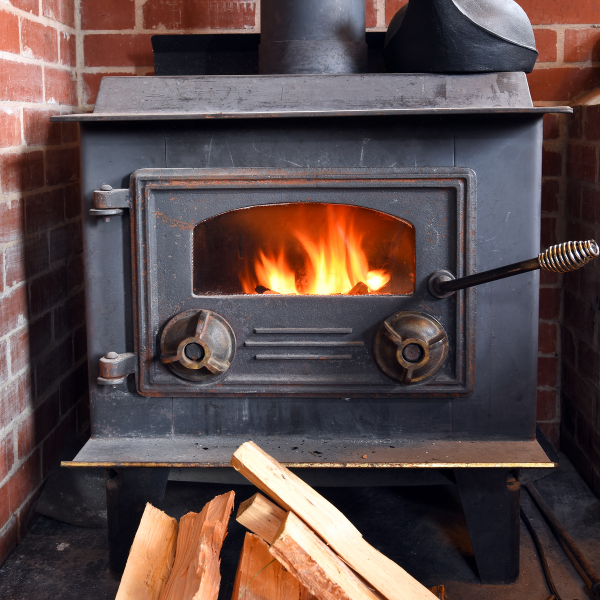
Specifically, these devices are characterized by their simple combustion process, which lacks advanced technology for burning gases and ash. As a result, these devices visibly release a significant portion of smoke through the chimney. More smoke indicates higher losses in air quality and heat efficiency. Currently, non-certified devices account for over 90% of wood combustion particle emissions in Quebec. This is why they are no longer sold in Quebec and are a major source of environmental and health concerns each winter.
The solution already exists
Fortunately, just as our cars and phones have advanced, so has wood heating technology. Modern units differ greatly from traditional stoves in operation and environmental impact. They are more efficient and smarter, providing cleaner combustion that substantially reduces smoke emissions and maximizes wood use. In fact, a log burns twice as long as it did in 1990. This progress enables wood heating to meet today’s standards for air quality and ecological responsibility.
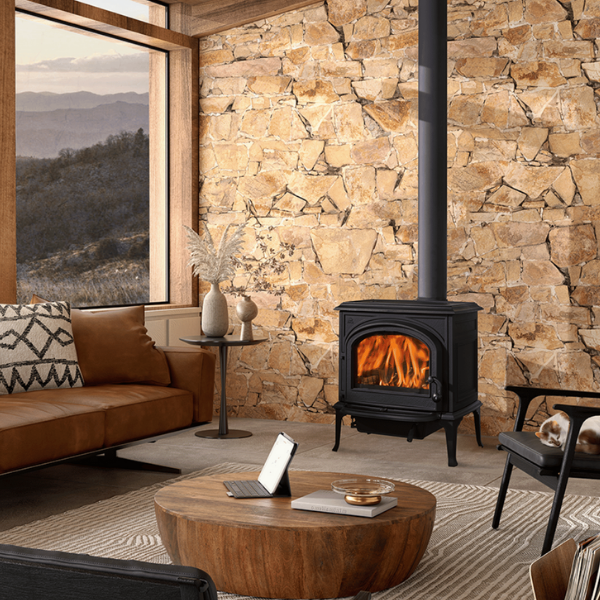
Modern wood heating has evolved significantly. Although replacing all old wood stoves won’t happen overnight, it is important to know that the solution is available. Recognizing what these alerts signify can help reassure users and understand that the issue isn’t with the wood itself, but with outdated equipment that hasn’t kept pace with our advancements.
On the Same Topic

Our chimneys smoke less, but wood heating has never disappeared. The same log now heats up to twice as much as in 1990, not because it has changed, but because the device has become ultra-efficient. The difference lies in the engineering.

Choosing a pellet stove is opting for reliable, efficient, and durable heating. Today’s models combine high performance, programmable comfort, and sleek design. True pieces of furniture, they provide controlled warmth and a design that naturally integrates into any interior.
Latest Publications

Did you know some fireplaces must be planned before your home is even built? Choosing a fireplace involves more than just picking a style. In this guide, discover how to plan your project, compare fireplace types and choose the right solution for your home.
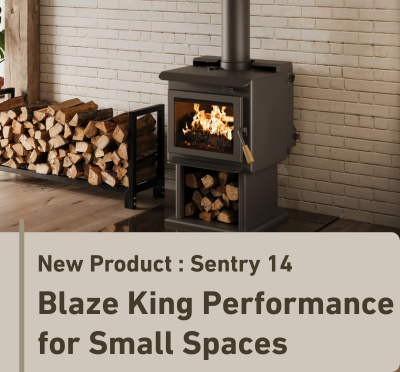
Today’s living spaces focus on clean lines, natural materials, and balanced proportions, making it challenging to include a high-end fireplace within small spaces such as cabins, or mobile homes. That’s why Blaze King created the Sentry 14, bringing the legendary performance of their full-sized wood stoves into a sleek, compact design.